








• About Us
  • Careers
  • Advertise
Wednesday, January 28, 2026
  • Login
  • Register
No Result
View All Result
SUBSCRIBE
CitizenVoice KE
25 °c
Nairobi
  • Home
  • Politics
  • Counties
  • Opinion
  • Business
  • Africa
  • World
  • Tech
    Digital Wallets Reshape Finance: Convenience and Access Drive Mass Adoption Over Traditional Banks

    Digital Wallets Reshape Finance: Convenience and Access Drive Mass Adoption Over Traditional Banks

    TikTok to Launch U.S. Joint Venture by 2026, Securing American Ownership

    TikTok to Launch U.S. Joint Venture by 2026, Securing American Ownership

    Airtel Africa to Bring Starlink Direct-to-Cell Internet Across the Continent in 2026

    Airtel Africa to Bring Starlink Direct-to-Cell Internet Across the Continent in 2026

    Trending Tags

    • Sillicon Valley
    • Climate Change
    • Election Results
  • Entertainment
    • All
    • Celebrities
    • Film
    • Music
    • Sports
    AFCON 2025: Heavyweights Collide as Knockout Stage Takes Shape

    AFCON 2025: Heavyweights Collide as Knockout Stage Takes Shape

    AFCON 2025: Nigeria Survives Fierce Tunisia Fightback, East African Stalemate Adds Group C Drama

    AFCON 2025: Nigeria Survives Fierce Tunisia Fightback, East African Stalemate Adds Group C Drama

    Kenyan Referees Appointed to Officiate Key Matches in AFCON 2025 Group Stage

    Kenyan Referees Appointed to Officiate Key Matches in AFCON 2025 Group Stage

    Trending Tags

    • Market Stories
    • Climate Change
  • Lifestyle
    • All
    • Health
    Marriage Is Not a 50:50 Partnership, High Court Rules in Matrimonial Property Case

    Marriage Is Not a 50:50 Partnership, High Court Rules in Matrimonial Property Case

    Over 80% of Rural Health Workers Say They May Quit, Study Warns

    Over 80% of Rural Health Workers Say They May Quit, Study Warns

    Tumour vs Cancer: What’s the Difference, and Why It Matters

    Tumour vs Cancer: What’s the Difference, and Why It Matters

    Trending Tags

    • Climate Change
CitizenVoice KE
  • Home
  • Politics
  • Counties
  • Opinion
  • Business
  • Africa
  • World
  • Tech
    Digital Wallets Reshape Finance: Convenience and Access Drive Mass Adoption Over Traditional Banks

    Digital Wallets Reshape Finance: Convenience and Access Drive Mass Adoption Over Traditional Banks

    TikTok to Launch U.S. Joint Venture by 2026, Securing American Ownership

    TikTok to Launch U.S. Joint Venture by 2026, Securing American Ownership

    Airtel Africa to Bring Starlink Direct-to-Cell Internet Across the Continent in 2026

    Airtel Africa to Bring Starlink Direct-to-Cell Internet Across the Continent in 2026

    Trending Tags

    • Sillicon Valley
    • Climate Change
    • Election Results
  • Entertainment
    • All
    • Celebrities
    • Film
    • Music
    • Sports
    AFCON 2025: Heavyweights Collide as Knockout Stage Takes Shape

    AFCON 2025: Heavyweights Collide as Knockout Stage Takes Shape

    AFCON 2025: Nigeria Survives Fierce Tunisia Fightback, East African Stalemate Adds Group C Drama

    AFCON 2025: Nigeria Survives Fierce Tunisia Fightback, East African Stalemate Adds Group C Drama

    Kenyan Referees Appointed to Officiate Key Matches in AFCON 2025 Group Stage

    Kenyan Referees Appointed to Officiate Key Matches in AFCON 2025 Group Stage

    Trending Tags

    • Market Stories
    • Climate Change
  • Lifestyle
    • All
    • Health
    Marriage Is Not a 50:50 Partnership, High Court Rules in Matrimonial Property Case

    Marriage Is Not a 50:50 Partnership, High Court Rules in Matrimonial Property Case

    Over 80% of Rural Health Workers Say They May Quit, Study Warns

    Over 80% of Rural Health Workers Say They May Quit, Study Warns

    Tumour vs Cancer: What’s the Difference, and Why It Matters

    Tumour vs Cancer: What’s the Difference, and Why It Matters

    Trending Tags

    • Climate Change
CitizenVoice KE

Bird flu warnings are being ignored. I’ve seen this pattern before

The Conversation by The Conversation
December 19, 2025
in World
A A
Bird flu warnings are being ignored. I’ve seen this pattern before
FacebookTwitterWhatsApp

There’s an unwritten rule in publishing, or so I’ve been told: don’t write about COVID. Our collective attention span has been saturated by those endless months holed up in attics and cramped corners of apartments, staring out at a world we could no longer take part in. When the worst of it passed, we felt an urge to close that chapter, to padlock it behind a heavy latch.

But in doing so, we also tuck away the hard-won lessons of that time: how quickly systems buckle, how two decades of coronavirus warnings accumulated without adequate preparedness, and how the very mechanisms we rely on for safety can become the scaffolding of a next disaster.

This matters now as another threat is taking shape: highly pathogenic avian influenza, known as bird flu.

Bird flu still poses a low‑probability threat of sustained human transmission. But that doesn’t make the virus harmless. The H5 viruses are brutally lethal to birds – 9 million have died outright, and hundreds of millions have been culled to contain the spread. Alarming is the virus’s expanding reach into mammals. So far, at least 74 mammal species, from elephant seals to polar bears, have suffered die‑offs.

The individual cases are situated within a broader shift. Dense poultry farms create opportunities for the virus to hop species. Over a thousand US dairy herds have tested positive in the past two years, and viral fragments have even been detected in milk – a worrying route of spillover. Every jump is a probe for new footholds.

Europe is seeing a surge too. From early September to mid-November 2025, 1,444 infected wild birds were found across 26 countries: a quadrupling compared with the year before.

Understand how AI is changing society, with our weekly newsletterSubscribe for free

This site is protected by reCAPTCHA and the Google Privacy Policy and Terms of Service apply.

Human cases remain rare: only 992 confirmed H5N1 infections worldwide since 2003, though with a near‑50% fatality rate. But the numbers are increasing.

The Americas have logged 75 cases since 2022, and in November, the US recorded its first H5N5 death in a patient with existing health problems. And although no human cases have been reported in Europe, the European Centre for Disease Prevention and Control warns that the widespread animal circulation raises the risk of spillover.

My research focuses on how warnings collapse before catastrophe, from geopolitical shocks to intelligence failures and industrial accidents. The pattern is often the same. Frontline observers spot something early, but the signal fades as it moves upward, diluted by bureaucracy, competing interpretations, or institutional forgetfulness.

The recent Hong Kong fire is yet another tragic example: residents at Wang Fuk Court had raised multiple alarms about the styrofoam boards that ignited with a lighter, the uncertified netting and the pattern of ignored safety notices long before the blaze, yet those concerns never gained traction.

The failures I study share recurring blind spots: weak signals drowned out by noise, bureaucratic habits that slow or soften uncomfortable messages, and the political instinct to downplay problems that threaten established narratives. When you see warning as a chain running from detection to decision, collapse is often partial. Some links hold. Others jam at the moment they are most needed.

Bird flu now sits inside that kind of chain. The technical ability to detect change is there: veterinarians, virologists and surveillance systems are picking up signals, sequencing viruses and logging outbreaks. But the infrastructure meant to catch the virus in its early stages is fraying. The agencies that once charted the terrain of emerging pandemic threats have been hollowed out – budgets trimmed, staff evaporated.
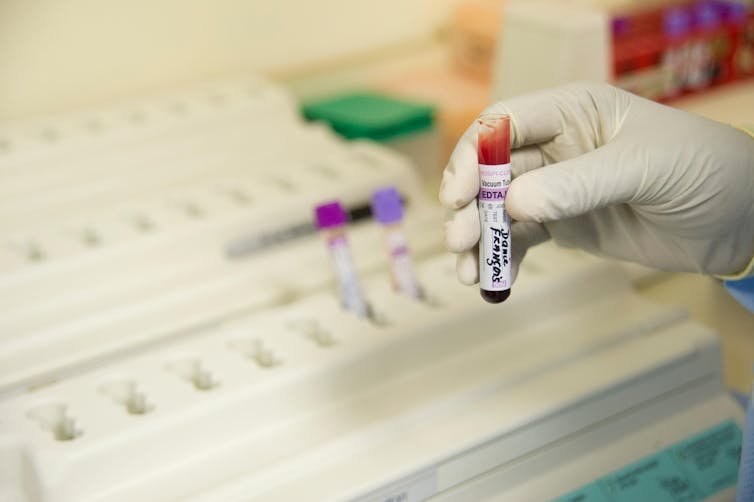
A gloved hand holding a blood sample.
Disease surveillance is fraying. ZUMA Press, Inc

Surveillance falters

A study of 31 European nations warned that COVID exposed a “critical gap in preparedness” and urged standardised indicators and open data as the foundation for any future response. The EU’s freshly launched pre-pandemic plan is a good step, but it cannot mask the gaps in day-to-day monitoring and response that still leave countries exposed.

Across the Atlantic, cuts have left the US Centers for Disease Control and Prevention scrambling. American scientists warn that federal reporting has slowed: the United States Department of Agriculture shared too little genetic data on the outbreak in cattle and other affected animals, released it late, and in formats researchers could not use. It left scientists unable to track how the virus was evolving or spreading across herds.

In the UK, domestic surveillance capacity has equally faced strain, with reduced access to European disease intelligence and chronic vet shortages weakening early detection.

Once the signal dims within institutions, it dims for the public as well. And a weak warning rarely travels far.

A recent poll shows this clearly: most Americans don’t even register bird flu as a credible threat. What doesn’t help is that symptoms in humans can be so mild that they slide past notice. A case in a dairy worker earlier this year looked like nothing more than conjunctivitis.

None of this means a new pandemic is imminent. Health authorities still say the chance of an efficient human-to-human outbreak is low. These viruses rarely make that leap. And we’re not helpless. We’re better prepared than we were before COVID: we have vaccine candidates, clearer protocols and agencies that learned painful lessons.

But low isn’t none. And if it were to occur, the consequences could be catastrophic. Most people have some immunity to the seasonal flu strains. We probably have none to H5.

And influenza doesn’t restrict itself to the frail in the way COVID often did; past flu epidemics killed healthy adults in large numbers. Adding to the concern, health expertise itself has come under attack, weakening the very authority that should turn signals into action.

If we avert our eyes from the bird flu threat because our systems have grown inattentive, underfunded and unprepared, we risk repeating that same pattern. And the next alarm will arrive too late for anyone to claim they didn’t see it coming.


Via: The Conversation
Tags: Avian fluBird fluDisease surveillanceGive me perspectiveInfectious diseases

Related Stories

Trump Announces “Large Scale Strike” on Venezuela, Claims Capture of President Maduro
World

Trump Announces “Large Scale Strike” on Venezuela, Claims Capture of President Maduro

by AFP
4 weeks ago

CARACAS/WASHINGTON – President Donald Trump has declared that U.S. forces have captured Venezuelan leader Nicolás Maduro following a "large scale...

Read moreDetails
Global EV Lead Changes Hands: BYD Overtakes Tesla as World’s Top Seller in 2025

Global EV Lead Changes Hands: BYD Overtakes Tesla as World’s Top Seller in 2025

4 weeks ago
Venezuela Denounces U.S. “Military Aggression” as Explosions Rock Caracas

Venezuela Denounces U.S. “Military Aggression” as Explosions Rock Caracas

4 weeks ago
Global Condemnation Greets Israel’s Unprecedented Recognition of Somaliland

Global Condemnation Greets Israel’s Unprecedented Recognition of Somaliland

1 month ago
Powerful 7.0 Magnitude Earthquake Strikes Off Taiwan’s Coast, No Major Damage Reported

Powerful 7.0 Magnitude Earthquake Strikes Off Taiwan’s Coast, No Major Damage Reported

1 month ago

Popular Stories

  • Economic Growth Shifts: Rural Counties Surge as Urban Centres Slow, Report Shows

    Economic Growth Shifts: Rural Counties Surge as Urban Centres Slow, Report Shows

    1 shares
    Share 0 Tweet 0
  • Central Bank Seeks Buyers to Dispose of 281 Tonnes of Old, Damaged Coins

    0 shares
    Share 0 Tweet 0
  • Venezuela Denounces U.S. “Military Aggression” as Explosions Rock Caracas

    0 shares
    Share 0 Tweet 0
  • Trump Announces “Large Scale Strike” on Venezuela, Claims Capture of President Maduro

    2 shares
    Share 1 Tweet 1
  • Global EV Lead Changes Hands: BYD Overtakes Tesla as World’s Top Seller in 2025

    0 shares
    Share 0 Tweet 0

Recommended

KRA Targets Sh2.9 Trillion in Taxes for 2026/27 Amid Strained Economy

KRA Targets Sh2.9 Trillion in Taxes for 2026/27 Amid Strained Economy

4 weeks ago
KUPPET Accuses TSC of Failing to Deliver on Key Promises Made to President Ruto

KUPPET Accuses TSC of Failing to Deliver on Key Promises Made to President Ruto

1 month ago
Oburu Odinga Declares Readiness to be ODM’s 2027 Presidential Flagbearer

Oburu Odinga Declares Readiness to be ODM’s 2027 Presidential Flagbearer

4 weeks ago

Connect with us

  • 4.7k Followers
  • 5.8k Fans
  • 3.6k Followers
CitizenVoice KE

CitizenVoice KE

Independent Reporting on Local & Global Affairs.

Follow us

  • Contact Us
  • Privacy Policy
  • Terms & Conditions

© 2025 CitizenVoice KE. | Powered by Avanah.io

Ok

Create New Account!

OR

Fill the forms below to register

All fields are required. Log In

Retrieve your password

Please enter your username or email address to reset your password.

Log In
No Result
View All Result
  • Home
  • Politics
  • Counties
  • Opinion
  • Business
  • Africa
  • World
  • Tech
  • Entertainment
    • Celebrities
    • Film
    • Music
    • Sports
  • Lifestyle
    • Fashion
    • Food
    • Health
    • Travel

© 2025 CitizenVoice KE. | Powered by Avanah.io

Are you sure want to unlock this post?
Unlock left : 0
Are you sure want to cancel subscription?