







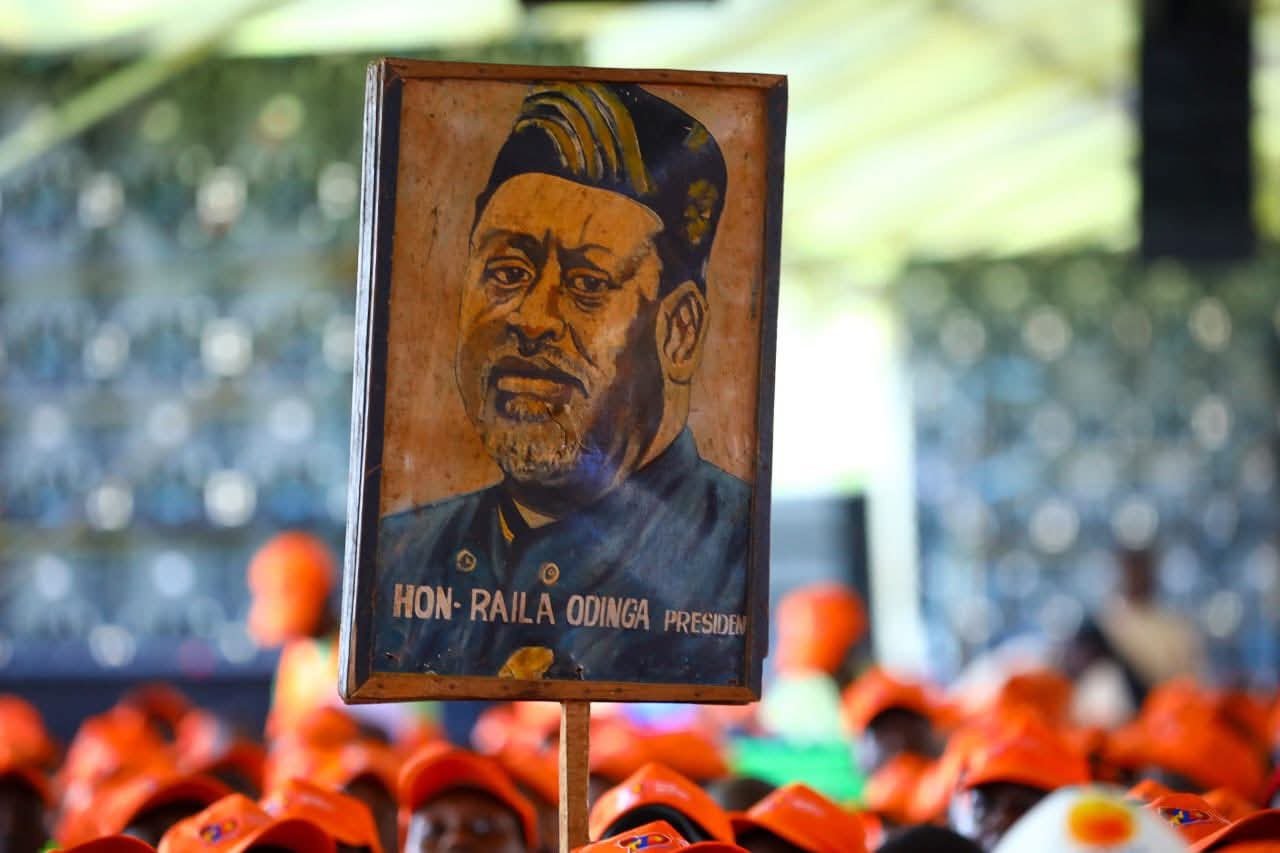
NAIROBI – The death of former Prime Minister Raila Odinga has fundamentally altered Kenya’s political landscape. His passing at the age of 80 while undergoing medical treatment in India concludes a decades-long, defining chapter in the country’s history, leaving a significant power vacuum and an uncertain future for the opposition.
A Nation in Mourning, A System in Flux
The news of Raila Odinga’s death following a cardiac arrest sent shockwaves across Kenya, prompting President William Ruto to declare a week of national mourning. For a figure who inspired both fierce loyalty (“Railamania”) and strong opposition (“Railaphobia”), his absence creates a profound void that extends far beyond his Orange Democratic Movement (ODM) party.
The Void Within ODM and the Opposition
Internally, the ODM party faces its most significant leadership crisis. Analysts question whether any successor can match Raila’s unique stature and tactical political mind, which were central to the party’s identity. As political observer Samuel Owida noted:
“Raila was like a political chameleon. When you thought you had finished him completely, he could still emerge in another form or version. That is the element that is clearly lacking in the current crop of leaders within the ODM Party.”
Beyond ODM, his death leaves the broader opposition divided and directionless, a situation compounded by the party’s decision to join President Ruto’s broad-based government in 2024.
A New Calculus for President Ruto
For President William Ruto, Raila’s passing changes the political equation. While the president had recently engaged Raila in personal dialogue to cool tensions, the removal of his most formidable rival also eliminates a key stabilizing force who could mobilize—or crucially restrain—mass public action.
Observers warn this new reality may create an opening for more radical elements, including recently active Gen-Z activists, to push for change outside traditional political structures.
The End of a Generational Rivalry
Raila’s death marks the definitive end of a historic, generations-long political saga with the Kenyatta family—a rivalry that began with their fathers, founding President Jomo Kenyatta and Vice President Jaramogi Oginga Odinga. It also triggers a pivotal succession question in Raila’s Luo-Nyanza heartland, which has voted as a bloc for decades, over whether leadership will remain within the Odinga dynasty or pass to a new generation.
Navigating a Transformed Political Terrain
Ultimately, Raila Odinga’s career was a central thread in the story of Kenya’s post-independence politics. His death closes an era defined by his relentless push for democratic reform. The nation is now left to navigate a transformed and more unpredictable political terrain without one of its most enduring and influential figures.