











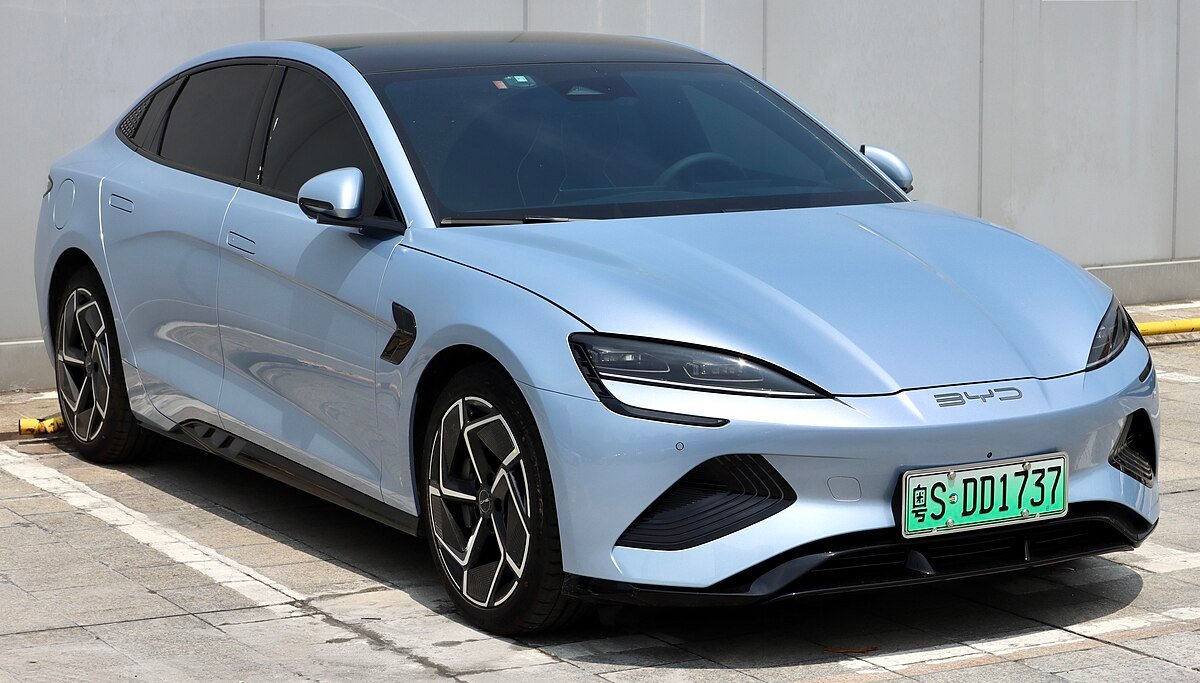
NATIONWIDE – In a major shift for the global automotive industry, Chinese auto giant BYD has dethroned Tesla as the world’s biggest seller of electric vehicles (EVs) for 2025. Tesla reported a more than 8% annual sales decline, capping off a challenging year marked by policy changes, political controversies, and intense competition.
The Numbers: A Clear Shift in Market Leadership
Tesla reported 418,227 deliveries for the final quarter of 2025, bringing its full-year total to approximately 1.64 million EVs. This marked a drop from its 2024 sales of 1.79 million vehicles. The day prior, BYD announced it sold a record 2.26 million EVs in 2025, solidifying its new position at the top of the market.
Tesla’s sales fell in 2025, the company reported Friday, ceding its position as the world’s biggest electric vehicle maker for the year to Chinese auto giant BYD.
Tesla’s quarterly figure fell short of analyst expectations of 449,000 deliveries, and its shares closed 2.6% down following the announcement.
Challenges in a Changing Market Landscape
Analysts point to a confluence of factors behind Tesla’s sales dip. A significant headwind was the elimination of a key $7,500 U.S. federal tax credit for EVs at the end of September 2025, which is expected to temporarily disrupt demand. The company has also faced sales struggles in key markets linked to CEO Elon Musk’s vocal political support for former U.S. President Donald Trump and other far-right figures.
Furthermore, competition has intensified globally. Tesla faces pressure not only from BYD—which also produces popular hybrid models—but also from other Chinese automakers and established European giants. Wedbush Securities analysts noted Tesla faces a “more difficult demand environment” following the tax credit change, with Europe remaining a particular challenge for deliveries and regulatory approval of its self-driving technology.
The Rise of a Chinese Juggernaut
Shenzhen-based BYD, founded in 1995 as a battery manufacturer, has come to dominate China’s vast and competitive market for “new energy vehicles.” The company is now aggressively expanding its overseas footprint, finding success in Southeast Asia, the Middle East, and Europe, even as it faces hefty tariffs in the United States.
While Tesla narrowly beat BYD in 2024, the 2025 results signal a decisive shift in the EV race, underscoring China’s formidable position in the global transition to electric mobility. Analysts noted that Tesla’s growth in smaller, emerging markets helped offset declines in major regions, but it was not enough to hold onto the annual sales crown.