










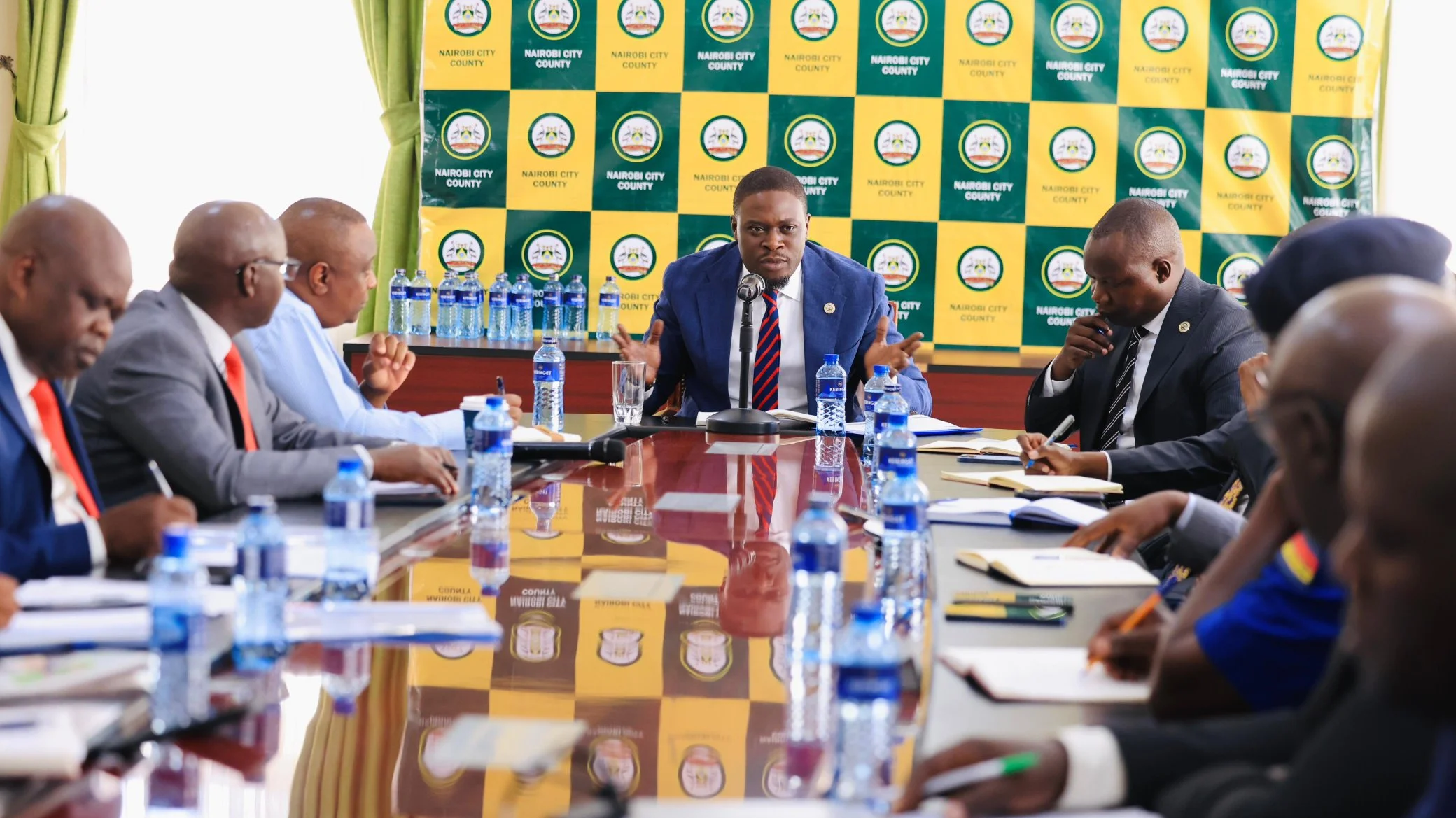
Nairobi County spent nearly seven out of every ten shillings of its revenue on salaries and allowances in the first quarter of the 2025/2026 financial year, raising questions over the government’s ability to deliver essential development projects, the Controller of Budget (CoB) has revealed.
According to CoB Margaret Nyakango’s first quarter report, the Johnson Sakaja-led administration collected Sh6.6 billion during the period. However, Sh4.7 billion of this went to staff compensation, leaving a fraction for development initiatives.
“Overall, the county spent Sh5.3 billion on recurrent expenditure, which included staff personal emoluments and recurrent programmes, while only Sh202.2 million was spent on development projects.” — Controller of Budget, Q1 Report
Of the total revenue, Sh3.4 billion came from the equitable share from the National Treasury, while Sh2.5 billion was generated from own-source revenue. Key local collections included Sh470 million from county-run hospitals, Sh408 million from parking fees, and over Sh300 million each from building permits and business permits.
Staff Costs Dominate Spending
Employee compensation alone accounted for Sh4.79 billion, or 69 per cent of total expenditure. Health sector employees took the lion’s share with Sh2.03 billion, representing 42 per cent of all staff payments.
The Nairobi County Assembly spent Sh12.7 million on committee sitting allowances for 124 MCAs, against an annual budget allocation of Sh70 million. Operations and maintenance costs surged to Sh519.15 million, a 207 per cent increase compared to the same period last year.
“The environment and sanitation docket absorbed more than half of development expenditure, including Sh75 million for a medium tracked dozer with a tipper and another Sh75 million for an additional tracked dozer.” — CoB Report
CoB Nyakango urged Governor Sakaja to ensure salaries are processed through the Human Resource Information System (HRIS) and to fast-track unified personnel numbers for all staff to improve efficiency. She also called on the County Public Service Board to regulate contract and casual staff, warning that uncontrolled hiring continues to strain county finances.
Development Budgets Hardly Tapped
Nyakango’s report flagged several counties for absorbing as little as two per cent of their total development budgets, highlighting weak service delivery and stalled projects.
Isiolo led with a 21 per cent absorption rate, followed by Kitui at 18 per cent. Machakos, Nyeri, and Uasin Gishu each posted 14 per cent, while Turkana and Laikipia recorded five per cent. Tana River, Nyandarua, and Kericho performed worst at four per cent, receiving billions but failing to spend a single shilling on development.
In Baringo, the county received Sh1.64 billion but spent Sh649.94 million on salaries and operations, plus Sh7.2 million on MCAs’ allowances, leaving nothing for development. West Pokot, which received Sh1.4 billion, also reported zero development expenditure, spending Sh750.16 million on employee compensation and Sh95.93 million for the County Assembly.
Vihiga spent over Sh1 billion from equitable share and own-source revenue on salaries and travel, including Sh45.7 million on domestic trips and Sh10.17 million on foreign travel. Turkana allocated Sh973.77 million of its Sh3.8 billion revenue to staff wages, again with no spending on development.
Own-Source Revenue Performance
The report also revealed disparities in counties’ ability to raise their own revenue. Samburu led with 40 per cent of its annual target collected in the first quarter, followed by Garissa at 36 per cent and Narok at 35 per cent. Kwale (9 per cent), Nandi (7 per cent), and Siaya (6 per cent) performed worst.
“County finances are under pressure as salaries consume the bulk of revenue, leaving development projects underfunded.” — CoB Margaret Nyakango
The report paints a stark picture of counties struggling to balance staff welfare with the urgent need to implement development projects and deliver public services efficiently.