











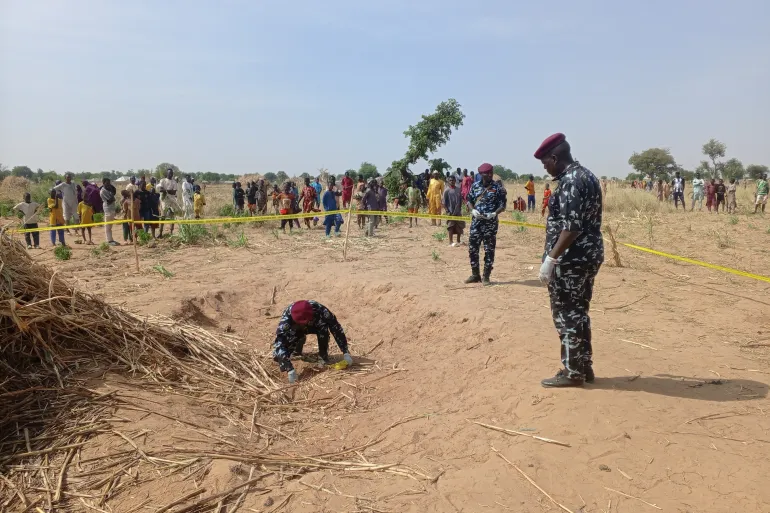
WASHINGTON/LAGOS – The United States’ unprecedented Christmas Day airstrikes on alleged ISIL targets in northwest Nigeria have been hailed by the Trump administration as a decisive counter-terror move. However, analysts and local reports suggest the operation may be strategically misguided, risking the misrepresentation of a complex conflict, inflaming local grievances, and failing to address the root causes of Nigeria’s deepening security crisis.
A Questionable Strategic Target
The initial strikes targeted Sokoto in Nigeria’s northwest, a region plagued by banditry and communal conflict rooted in economic collapse and competition for land, not by a cohesive ISIL-led insurgency. This raises immediate questions about the operation’s logic, as the primary ideological threats—Boko Haram and ISWAP—are based hundreds of kilometres away in the northeast.
“According to a private source familiar with the US operation… several strikes were launched, but most of the individuals and groups targeted were missed, and the actual damage inflicted remains mostly unknown,” security analyst Brant Philip reported on social media platform X.
Local media, including Arise TV, reported the strikes caused widespread panic in areas previously untouched by such violence, with the full impact and potential for civilian casualties still undetermined.
High Risk of Political and Religious Backlash
Beyond tactical concerns, the symbolism of the strikes carries significant risk. Conducted on Christmas Day and centred on Sokoto—the historic spiritual seat of the Sokoto Caliphate—the operation risks being interpreted within a highly sensitive religious and political context. For many Muslims in northern Nigeria, this could reinforce hardline narratives of a Western “crusade,” potentially inflaming anti-US sentiment and providing propaganda fuel for extremist recruitment.
Addressing the Real Roots of Insecurity
Critics argue that such foreign military interventions distract from the necessary, complex work of solving Nigeria’s internal governance failures. In the northwest, banditry thrives in a vacuum where the state is absent, forcing communities to negotiate with armed groups for basic security. In the northeast, years of government neglect and heavy-handed tactics fostered the insurgency.
The sustainable path forward, therefore, is not through aerial bombardment but through a multi-layered approach: investing in community policing, fostering dialogue, supporting deradicalisation, and most critically, rebuilding a state presence that protects citizens and restores trust in institutions.
The U.S. strikes may satisfy a political agenda abroad, but for Nigerians, real security will come from autochthonous reform and long-term support for local stability, not external military action.