









• About Us
  • Careers
  • Advertise
Monday, July 27, 2026
  • Login
  • Register
No Result
View All Result
SUBSCRIBE
CitizenVoice KE
13 °c
Nairobi
  • Home
  • Politics
  • Counties
  • Opinion
  • Business
  • Africa
  • World
  • Tech
    Digital Wallets Reshape Finance: Convenience and Access Drive Mass Adoption Over Traditional Banks

    Digital Wallets Reshape Finance: Convenience and Access Drive Mass Adoption Over Traditional Banks

    TikTok to Launch U.S. Joint Venture by 2026, Securing American Ownership

    TikTok to Launch U.S. Joint Venture by 2026, Securing American Ownership

    Airtel Africa to Bring Starlink Direct-to-Cell Internet Across the Continent in 2026

    Airtel Africa to Bring Starlink Direct-to-Cell Internet Across the Continent in 2026

    Trending Tags

    • Sillicon Valley
    • Climate Change
    • Election Results
  • Entertainment
    • All
    • Celebrities
    • Film
    • Music
    • Sports
    AFCON 2025: Heavyweights Collide as Knockout Stage Takes Shape

    AFCON 2025: Heavyweights Collide as Knockout Stage Takes Shape

    AFCON 2025: Nigeria Survives Fierce Tunisia Fightback, East African Stalemate Adds Group C Drama

    AFCON 2025: Nigeria Survives Fierce Tunisia Fightback, East African Stalemate Adds Group C Drama

    Kenyan Referees Appointed to Officiate Key Matches in AFCON 2025 Group Stage

    Kenyan Referees Appointed to Officiate Key Matches in AFCON 2025 Group Stage

    Trending Tags

    • Market Stories
    • Climate Change
  • Lifestyle
    • All
    • Health
    Marriage Is Not a 50:50 Partnership, High Court Rules in Matrimonial Property Case

    Marriage Is Not a 50:50 Partnership, High Court Rules in Matrimonial Property Case

    Over 80% of Rural Health Workers Say They May Quit, Study Warns

    Over 80% of Rural Health Workers Say They May Quit, Study Warns

    Tumour vs Cancer: What’s the Difference, and Why It Matters

    Tumour vs Cancer: What’s the Difference, and Why It Matters

    Trending Tags

    • Climate Change
CitizenVoice KE
  • Home
  • Politics
  • Counties
  • Opinion
  • Business
  • Africa
  • World
  • Tech
    Digital Wallets Reshape Finance: Convenience and Access Drive Mass Adoption Over Traditional Banks

    Digital Wallets Reshape Finance: Convenience and Access Drive Mass Adoption Over Traditional Banks

    TikTok to Launch U.S. Joint Venture by 2026, Securing American Ownership

    TikTok to Launch U.S. Joint Venture by 2026, Securing American Ownership

    Airtel Africa to Bring Starlink Direct-to-Cell Internet Across the Continent in 2026

    Airtel Africa to Bring Starlink Direct-to-Cell Internet Across the Continent in 2026

    Trending Tags

    • Sillicon Valley
    • Climate Change
    • Election Results
  • Entertainment
    • All
    • Celebrities
    • Film
    • Music
    • Sports
    AFCON 2025: Heavyweights Collide as Knockout Stage Takes Shape

    AFCON 2025: Heavyweights Collide as Knockout Stage Takes Shape

    AFCON 2025: Nigeria Survives Fierce Tunisia Fightback, East African Stalemate Adds Group C Drama

    AFCON 2025: Nigeria Survives Fierce Tunisia Fightback, East African Stalemate Adds Group C Drama

    Kenyan Referees Appointed to Officiate Key Matches in AFCON 2025 Group Stage

    Kenyan Referees Appointed to Officiate Key Matches in AFCON 2025 Group Stage

    Trending Tags

    • Market Stories
    • Climate Change
  • Lifestyle
    • All
    • Health
    Marriage Is Not a 50:50 Partnership, High Court Rules in Matrimonial Property Case

    Marriage Is Not a 50:50 Partnership, High Court Rules in Matrimonial Property Case

    Over 80% of Rural Health Workers Say They May Quit, Study Warns

    Over 80% of Rural Health Workers Say They May Quit, Study Warns

    Tumour vs Cancer: What’s the Difference, and Why It Matters

    Tumour vs Cancer: What’s the Difference, and Why It Matters

    Trending Tags

    • Climate Change
CitizenVoice KE

Zimbabwe Parliament Clears Bill to Extend Mnangagwa’s Rule and Scrap Direct Presidential Polls

Michelle Ngina by Michelle Ngina
June 19, 2026
in Africa
A A
Zimbabwe Parliament Clears Bill to Extend Mnangagwa’s Rule and Scrap Direct Presidential Polls

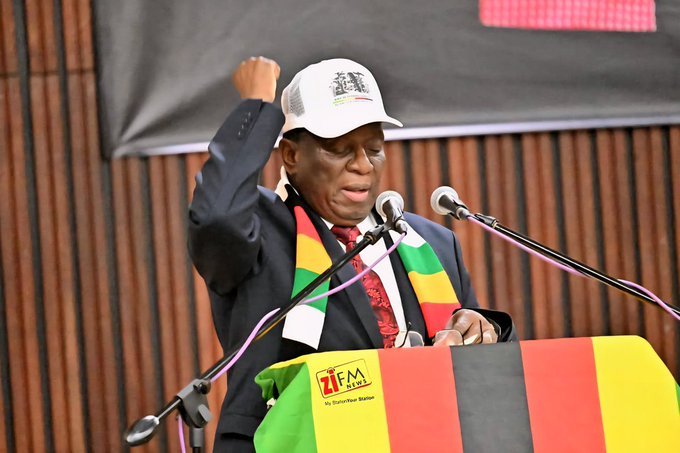
President of Zimbabwe Emmerson Mnangagwa (Photo: Emmerson Mnangagwa via X)

FacebookTwitterWhatsApp

A constitutional amendment passed by a two-thirds majority would keep President Emmerson Mnangagwa in office until 2030 and hand parliament the power to choose future presidents.

Zimbabwe’s lower house of parliament has approved sweeping constitutional changes that would extend President Emmerson Mnangagwa’s time in office by two years and fundamentally alter how the country elects its president, deepening a months-long political crisis over the limits of executive power.

The bill passed with 216 votes in favour and 42 against, clearing the two-thirds majority required to amend the constitution. It now moves to the Senate, where the ruling ZANU-PF party also holds a commanding presence, before going to Mnangagwa for his signature.

The changes are far-reaching. Presidential and parliamentary terms would be extended from five years to seven, pushing the next general election from 2028 to 2030. More significantly, the bill scraps direct presidential elections entirely, replacing them with a system in which members of parliament would elect the president. The Speaker of Parliament announced the results after weeks of heated debate that, at points, spilled into open confrontation inside and outside the chamber.

A long-running campaign finally delivered

The vote is the culmination of a drive that began in earnest at ZANU-PF’s annual conference in October 2025, when delegates passed a resolution directing the government to put in place the legal changes needed to keep Mnangagwa in office beyond his current term. The Justice Minister formally tabled the bill in the lower house on 3 June 2026.

Mnangagwa came to power in November 2017, when a military intervention ended the long rule of Robert Mugabe. He won elections in 2018 and again in 2023, both of which opposition parties and international observers disputed. Under the constitution that has been in place since 2013, he is barred from seeking re-election and his term ends in 2028.

Party loyalists framed the push to extend his rule as a response to popular demand for continuity and stability. Critics saw it as a straightforward attempt to entrench one man’s hold on power by dismantling the very rules designed to prevent it.

Opposition drowned out, not absent

The path to Thursday’s vote was not smooth. Public hearings on the bill were marred by violence and intimidation. Opposition lawmakers and civil society representatives walked out of consultative sessions in April after their members were harassed. A human rights lawyer was physically attacked at a hearing in Harare, with his phone taken and glasses broken. Human Rights Watch documented a pattern of crackdowns against those who spoke out against the amendments.

Opposition figures were unequivocal in their rejection of the bill. Former Citizens Coalition for Change leader Nelson Chamisa said any constitutional changes could only bind ZANU-PF members and not the Zimbabwean people. Another opposition figure, Tendai Biti, pledged to defend the constitution against what he described as a politically dangerous agenda. A smaller party, FORUS, formally petitioned parliament to reject the bill, arguing that Section 328(7) of the constitution explicitly bars a sitting president from personally benefiting from any changes to term limits.

Those arguments were tested in court. Zimbabwe’s Constitutional Court dismissed a legal challenge seeking to block the bill earlier this week, clearing the way for the parliamentary vote. The court’s ruling removed what had been seen as the single most consequential obstacle to the amendment’s passage.

What the changes mean in practice

The move to replace direct presidential elections with a parliamentary vote is, in many ways, the more lasting change. Even if a future president were eventually term-limited, the mechanism for choosing one would shift power from ordinary voters to a chamber where ZANU-PF has long dominated. Critics say this makes democratic accountability structurally harder to achieve, regardless of which individual occupies the presidency.

Zimbabwe’s 2013 constitution was itself the product of a negotiated political settlement designed to check the kind of unchecked executive power that defined the Mugabe era. Its two-term limit and referendum requirements for major changes were deliberate safeguards. The current amendment bypasses the referendum route, a point that opposition lawyers and civil society groups have consistently raised.

ZANU-PF has governed Zimbabwe without interruption since independence in 1980. The party’s ability to marshal a two-thirds majority in the lower house reflects both the scale of its parliamentary dominance and the limited institutional capacity of a divided opposition to mount an effective check.

What comes next

The bill now heads to the Senate. If approved there, as is widely expected, it will be sent to Mnangagwa for assent. Should he sign it into law, the 2028 elections will be formally deferred, and the next presidential vote will take place in 2030 under a system in which MPs, not voters, will make the final choice.

For Zimbabwe’s citizens, the practical consequences extend well beyond the question of who holds office. A longer electoral cycle reduces the frequency with which governments can be held to account at the ballot box. The removal of direct presidential elections takes away a mechanism that, however imperfect in practice, has historically given voters a formal channel to register dissatisfaction with those in power. Whether the Senate or any remaining legal avenue can alter the bill’s course is the question that now hangs over Harare.


Tags: Emmerson MnangagwaZANU-PFZimbabwe

Related Stories

AFCON 2025: Heavyweights Collide as Knockout Stage Takes Shape
Africa

AFCON 2025: Heavyweights Collide as Knockout Stage Takes Shape

by Salim Ali
7 months ago

MOROCCO – The group stage dust has settled at the 2025 Africa Cup of Nations, setting the stage for a...

Read moreDetails
U.S. Christmas Day Airstrikes in Nigeria: Strategic Blunder or Security Solution?

U.S. Christmas Day Airstrikes in Nigeria: Strategic Blunder or Security Solution?

7 months ago
Global Condemnation Greets Israel’s Unprecedented Recognition of Somaliland

Global Condemnation Greets Israel’s Unprecedented Recognition of Somaliland

7 months ago
AFCON 2025: Nigeria Survives Fierce Tunisia Fightback, East African Stalemate Adds Group C Drama

AFCON 2025: Nigeria Survives Fierce Tunisia Fightback, East African Stalemate Adds Group C Drama

7 months ago
UN Chief Calls for Peaceful, Credible Polls as Central African Republic Nears Historic Elections

UN Chief Calls for Peaceful, Credible Polls as Central African Republic Nears Historic Elections

7 months ago

Popular Stories

  • State to Begin Compensating Over 1,800 Protest-Related Human Rights Victims Starting Next Week

    State to Begin Compensating Over 1,800 Protest-Related Human Rights Victims Starting Next Week

    1 shares
    Share 0 Tweet 0
  • Shakahola Trial Judges to Inspect Forest Sites as Case Enters Critical Phase

    2 shares
    Share 1 Tweet 1
  • Zimbabwe Parliament Clears Bill to Extend Mnangagwa’s Rule and Scrap Direct Presidential Polls

    2 shares
    Share 1 Tweet 1
  • Matiang’i and Maraga Hold Talks as Opposition Steps Up 2027 Coalition Building

    2 shares
    Share 1 Tweet 1
  • Global Oil Prices Drop Below Sh10,800 as US-Iran Peace Deal Raises Hopes of Strait of Hormuz Reopening – What It Means for Kenyan Consumers

    2 shares
    Share 1 Tweet 1

Recommended

Abel Mutua Narrowly Escapes Armed Robbery in Kahawa West, Thanks Fans for Support

Abel Mutua Narrowly Escapes Armed Robbery in Kahawa West, Thanks Fans for Support

10 months ago
U.S. Christmas Day Airstrikes in Nigeria: Strategic Blunder or Security Solution?

U.S. Christmas Day Airstrikes in Nigeria: Strategic Blunder or Security Solution?

7 months ago
Kenya Moves to Establish National Cybersecurity Agency, Aims for African Hub Status

Kenya Moves to Establish National Cybersecurity Agency, Aims for African Hub Status

7 months ago

Connect with us

  • 4.7k Followers
  • 5.8k Fans
  • 3.6k Followers
CitizenVoice KE

CitizenVoice KE

Independent Reporting on Local & Global Affairs.

Follow us

  • Contact Us
  • Privacy Policy
  • Terms & Conditions

© 2025 CitizenVoice KE. | Powered by Avanah.io

Ok

Create New Account!

OR

Fill the forms below to register

All fields are required. Log In

Retrieve your password

Please enter your username or email address to reset your password.

Log In
No Result
View All Result
  • Home
  • Politics
  • Counties
  • Opinion
  • Business
  • Africa
  • World
  • Tech
  • Entertainment
    • Celebrities
    • Film
    • Music
    • Sports
  • Lifestyle
    • Fashion
    • Food
    • Health
    • Travel

© 2025 CitizenVoice KE. | Powered by Avanah.io

Are you sure want to unlock this post?
Unlock left : 0
Are you sure want to cancel subscription?