










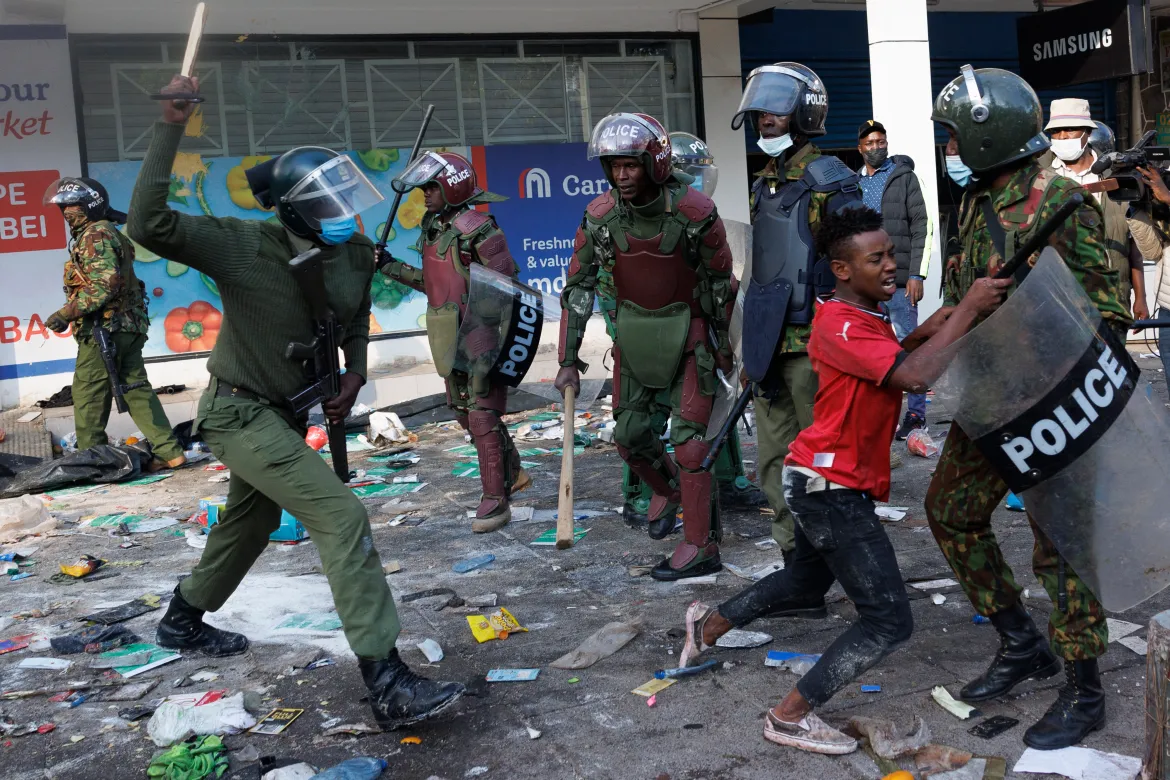
More than 1,800 Kenyans who suffered human rights violations during recent protest periods are set to receive state compensation as early as next week, following the completion of a national verification process.
The announcement was made on Monday at State House during the release of a national reparations framework report. Senior Advisor on Constitutional Affairs, Professor Makau Mutua, told attendees that the government is finalizing preparations to roll out payments after conducting final checks on eligible cases.
“The panel, your excellency, is now subjecting all of these names to verification assisted by its AI-integrated case management system and will be in a position to begin making payments in a short time, in a week from today,” Mutua said.
The compensation initiative follows the submission of the Framework for Reparations for Victims of Human Rights Violations, prepared by the Kenya National Commission on Human Rights (KNCHR) and presented to the Head of State on Monday. The document outlines how victims of protest-related abuses will be identified, verified, and compensated under a structured government program.
The government previously allocated Sh2 billion in the first supplementary budget for the 2025/2026 financial year to fund the exercise.
KNCHR Chairperson Claris Ogangah, while presenting the report, described the process as a crucial step toward restoring trust and strengthening national unity while addressing past violations.
“Kenya has taken an important step towards healing historical wounds, strengthening national unity and building a society founded on justice, human dignity, accountability and respect for human rights,” Ogangah said.
Scope of the compensation program
The program covers victims of violent protests recorded during:
- The 2017 and 2022 post-election periods
- The 2023 and 2024 Finance Bill demonstrations
- The 2025 Saba Saba protests
According to KNCHR, 1,815 claims have been documented since the framework was launched. An additional 1,022 cases were submitted by the Independent Policing Oversight Authority (IPOA), with other files forwarded through the Ministry of Interior.
From the combined records, 1,101 victims have been verified and have given consent across six categories of violations:
- 245 deaths
- 135 injuries
- 473 arrests
- 75 cases of sexual violence
- 138 incidents of property destruction
Ogangah clarified that “not all cases reported to the commission qualified as gross human rights violations for reparations, as some were isolated criminal acts.” Those cases will proceed through the criminal justice system.
Verification and eligible victims
Additional records show that KNCHR submitted approximately 1,100 names, while IPOA contributed about 200 names, all of which remain under review by the compensation panel. More than 200 additional victims from the National Police Service, Kenya Prisons Service, and National Youth Service have also been identified for consideration.
The Ministry of Interior and KNCHR have stated that the framework is designed to strengthen transparency and rebuild public confidence in the compensation process. Over 160 claims involving business losses and economic damage have also been received and are part of the ongoing assessment.
The scheme will benefit both civilians and security officers who suffered during protest periods, including:
- Injured individuals
- Bereaved families
- Those whose livelihoods were affected
- Victims of deaths linked to police action, serious injuries, torture, abductions, enforced disappearances, sexual violence, and property destruction
Required documentation
To qualify, victims and families were required to submit supporting documents to KNCHR for verification. These included:
- Police-issued P3 forms
- Medical reports and hospital discharge summaries
- Occurrence Book records
- For death-related claims: post-mortem reports, witness statements, and other supporting evidence
Professor Mutua confirmed that the verification process is ongoing, and payments will begin once eligible victims are cleared under the system, with rollout expected as early as next week.