











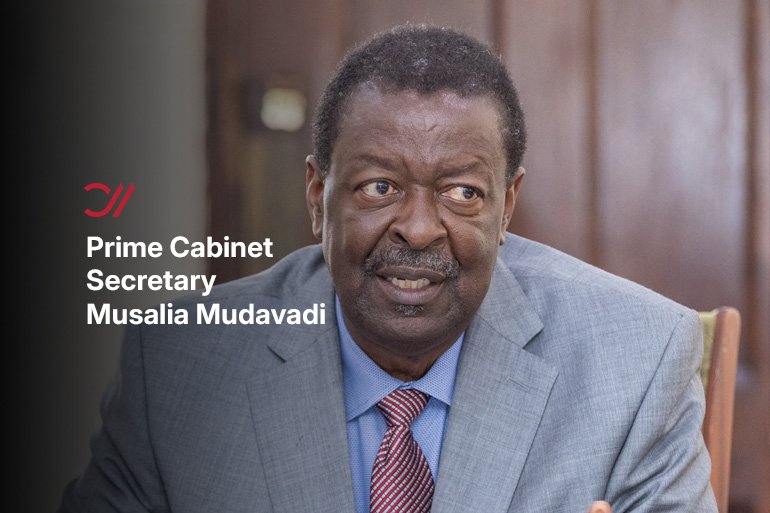
VIHIGA – Prime Cabinet Secretary Musalia Mudavadi has issued a stark warning that Kenya is hurtling toward a constitutional crisis that could imperil the 2027 General Election, calling for an urgent national referendum to address what he terms critical legal and demographic gaps in the 2010 Constitution.
The Imminent Threat to the 2027 Election
Addressing the media in his Vihiga County backyard, Mudavadi framed the need for a review as a matter of electoral survival. He argued that the failure to review electoral boundaries by the constitutional deadline of March 2024 has created a precarious legal foundation for the next poll.
“Allow me to state without fear of contradiction that there is an imperative need for a constitutional review 15 years after the promulgation of the 2010 Katiba. As a country, we are staring at a massive legal crisis where the 2027 election could be nullified before it even begins,” Mudavadi stated.
He warned that without updated boundaries, the Independent Electoral and Boundaries Commission (IEBC) cannot ensure fair representation, a situation compounded by disputed census data in several counties. “No valid population, no boundaries review, and hence, no valid general election. Ignoring this is to act at grave peril to our constitutionalism,” he added.
Key Issues Demanding a Referendum
Mudavadi outlined a multi-faceted agenda for the proposed constitutional overhaul:
- Electoral Boundaries & Representation: To resolve the missed legal deadline for review and address inequities caused by population shifts.
- Contradictory Ward Laws: To harmonise the Constitution, which gives IEBC power to adjust wards, with the County Governments Act that caps their number at 1,450.
- Two-Thirds Gender Rule: To finally implement this long-stalled provision for inclusive governance.
- Formalising High Offices: To entrench the offices of the Prime Minister and the Official Leader of Opposition in the Constitution for national unity and stability.
Proposed New Funds for Grassroots Development
Beyond governance structures, Mudavadi’s proposal includes creating new dedicated funding streams to strengthen devolution and service delivery. He advocates for embedding the National Government Constituencies Development Fund (NG-CDF) in the Constitution to protect education bursaries, alongside establishing both a Senate Oversight Fund and a new Ward Development Fund. The latter is aimed at ensuring resources for community projects flow directly to citizens.
A Call for National Dialogue
The Prime CS’s call sets the stage for a major national debate as the country moves closer to the next election cycle. By framing the referendum as essential to preventing a legal nullification of the 2027 polls, Mudavadi has elevated the issue from a political discussion to a pressing constitutional imperative, challenging all stakeholders to engage.