










The meeting between two declared presidential hopefuls signals a widening effort to consolidate opposition forces ahead of the next general election.
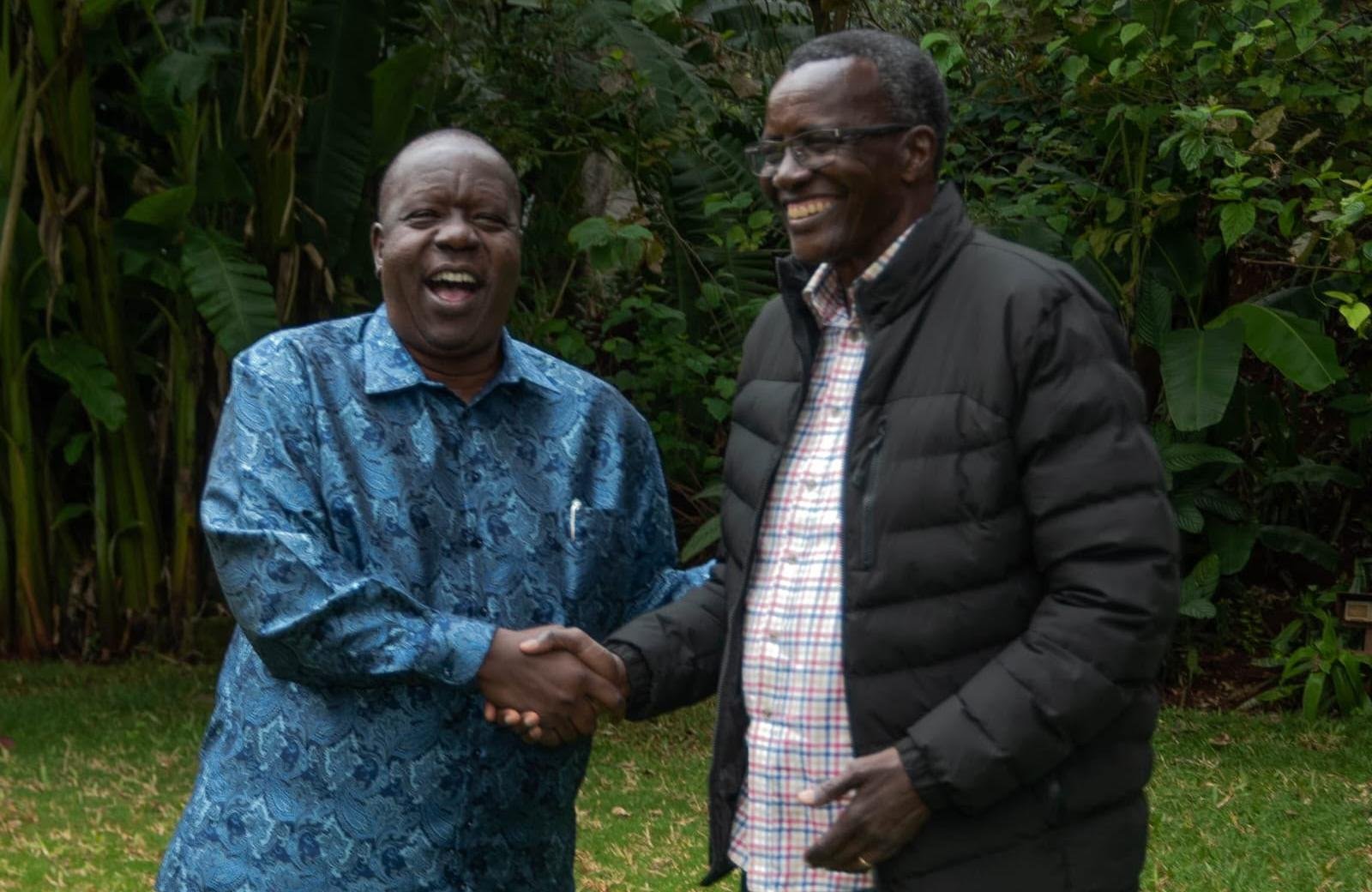
The pace of opposition political activity is picking up. Former Cabinet Secretary Fred Matiang’i met with former Chief Justice David Maraga on Friday in what both framed as a conversation about governance accountability and building a united front against President William Ruto’s administration ahead of the 2027 General Election.
Matiang’i, who serves as Jubilee Party’s deputy leader and has declared his presidential ambitions, described the engagement as part of ongoing consultations aimed at forging a broad coalition. He said the goal was to build a front committed to a better future for Kenyans and to “liberate Kenya,” language that signals the opposition is positioning itself around a governance reform agenda rather than a narrowly partisan one.
The meeting with Maraga is the latest in a series of back-to-back political consultations. Just days earlier, Matiang’i met with leaders affiliated with the Linda Mwananchi political formation, including Siaya Governor James Orengo and Embakasi East MP Babu Owino. Taken together, the engagements point to a deliberate effort to map out alliances across different political formations before any formal coalition is announced.
What makes the Matiang’i-Maraga conversation particularly significant is that both men are themselves potential presidential candidates. Maraga, who served as Chief Justice from 2016 to 2021, has built a public profile around constitutional principles and institutional integrity since leaving the bench. He has grown increasingly vocal on governance issues in recent years, and his entry into active political life has been watched closely given his credibility with reform-minded voters. For two presidential hopefuls to sit down and discuss unity rather than competition is notable, even if no formal arrangement has yet been announced.
The central challenge this dynamic raises is one familiar to Kenyan politics: how to unite around a single candidate when multiple credible figures each believe they are best placed to lead. In past election cycles, the failure to resolve that question early enough has cost opposition coalitions dearly. The 2022 election, in which Raila Odinga ran as the Azimio candidate against then-Deputy President Ruto, illustrated how late-stage fragmentation and internal disagreements can blunt an otherwise competitive opposition effort.
It is still early. No coalition has been declared, no flagbearer agreed upon, and no formal structure announced. The language from both Matiang’i and Maraga remains carefully pitched at unity and shared values rather than explicit electoral strategy. That is partly by design. In Kenyan politics, premature declarations of coalition partnerships often trigger a scramble over running-mate positions and resource allocation that can fracture alliances before they have even properly formed.
What the current phase of talks does tell us is that the opposition is not waiting for 2027 to draw closer before beginning its organising work. The consolidation of talking points around governance, accountability, and citizen welfare suggests a conscious attempt to build a policy-anchored identity for whatever coalition emerges, rather than simply presenting itself as an anti-Ruto formation.
Whether Matiang’i and Maraga ultimately end up in the same political vehicle, or compete against each other, remains an open question. For now, the significance of their meeting lies less in what was decided and more in what it signals: that opposition leaders are in active dialogue, and that the race to define the alternative to a Ruto second term has genuinely begun.